lunes, 27 de mayo de 2013

SÍNDROME DE MASAKO


Con motivo de los eventos de la reciente coronación del príncipe Guillermo de Holanda, saltaba de nuevo a las páginas de la prensa rosa, la situación de la princesa japonesa Masako- esposa del actual príncipe heredero al trono imperial Naruhito- la cual hacía mucho tiempo que no asistía a ningún evento, aquejada como está desde hace 11 años de una severa depresión.

Ver noticia en el siguiente link:


Antes de llegar a la Casa Imperial japonesa, su historia era distinta, hija de un importante diplomático, aprendió cinco idiomas, se graduó como economista con honores en la Universidad de Harvard, estudió Derecho en Tokio y trabajó en el ministerio de Asuntos Exteriores; pero se casó con el heredero de la realeza japonesa, el príncipe Naruhito, y para colmo no ha podido darle un hijo varón.

Articulada, sobresaliente, fluida en inglés, francés, ruso, alemán y español, pudo haber sido una excelente embajadora, pero en lugar de eso se hundió en un ambiente mohoso, y extemporáneo, donde le aconsejaron caminar tres pasos por detrás de su marido, no hablar a menos que se le hable, sonreír un poco, saludar un poco.


La vida de la princesa no parece que pueda ser real en pleno siglo XXI:

No puede salir de palacio sin permiso, no tiene tarjeta de crédito, no dispone de acceso ilimitado a las comunicaciones telefónicas y a los familiares directos, ni cuenta con pasaporte individual, ni rutina propia.

Evidentemente el caso de la princesa Masako es un caso extremo por su condición de princesa y por las condiciones de la corte japonesa, casi aún de carácter medieval.


Pero abstrayéndonos de su particularidad, el caso de la princesa japonesa nos ha llevado a reflexionar sobre la condición de lo que nosotras hemos llamado “síndrome Masako” de muchas mujeres.
Porque, qué duda cabe que la renuncia a los proyectos se da en muchas de nosotras. No entramos en una corte rígida imperial, pero sí entramos en seno de familias “con ideas propias” que poco a poco nos van imponiendo sus normas (simplemente el ritual de que la Navidad siempre se pasa en casa de los padres de él) También entramos a trabajar en empresas que –por el hecho de que seamos mujeres- no contemplan o estiman nuestros puntos de vista.

Cierto es que hoy día en occidente podemos salir a donde nos plazca y tenemos nuestra tarjeta de crédito pero con un sueldo que casi raya un 25% menos que el del varón, la libertad es relativa y viene marcada por el saldo de final de mes.

La carga que supone la crianza de los hijos, el trabajo, la atención a los padres que ya son mayores… no nos niega que salgamos a ver a las amigas, pero el día solo tiene 24 horas y normalmente nos queda poco tiempo y el que queda, lo aprovechamos para poner al día cosas atrasadas. Lejos queda para nosotras el sofá del salón, que poco o nada frecuentamos. Es más bien el “Santa Santorum” de “Manolo”, desde el que ve sus partidos de football, solo o con sus amigos, o en el que descansa de su fatigosa semana echándose su siestecita del fin de semana.

La vida de nosotras, las mujeres, está jalonada de pequeñas renuncias en el día a día, que sin causarnos una depresión de la magnitud de la que padece la princesa, van creando en nosotros un ánimo poco animado –permítannos el juego de palabras- que luego se somatiza y surgen los dolores de cabeza, las tensiones de cuello, las malas digestiones, la dificultad para conciliar el sueño, cierta irritabilidad, poca concentración… No son sintomatologías graves, pero enmascaran un estado depresivo no evidente -“edne”- que es el espejo en el que se contempla una Masako. ¡Ojo! Que se puede convertir en una muñeca de moda que finalmente “Papa” Noël se la regale a nuestras niñas por Navidad.

Invitamos a la reflexión de nuestras pequeñas renuncias, esas que van socavando nuestra salud y que ponen de manifiesto que las mujeres –aún en occidente- vivimos encerradas -ya sea palacio o piso de 70 metros cuadrados, en las invisibles redes de un patriarcado aún muy arraigado.

Tengámoslo claro: La renuncia a los proyectos propios es el comienzo de un paulatino deterioro físico y anímico.

MASACO SYNDROME


On the occasion of the recent coronation of William prince of the Netherlands, the princess of Japan Masako became news again. She is the wife of the prince-heir to the throne of Japan, Naruhito, and it has been a while since she assisted to any event because of the severe depression she suffers for 11 years now.
http://elpais.com/elpais/2013/03/22/gente/1363972957_227355.html


Before she arrived to de Japanese Imperial house, she had a different story. She is the daughter of an important diplomat, she speaks five languages and graduated with honors as an economist from Harvard University; she studied law in Tokyo and worked in the Ministry of Foreign Affairs; but she married the heir of the Japanese throne, prince Naruhito, and on top of everything she has not been able to give him a son.

Articulated, overachiever, speaks English, French, Russian, German and Spanish fluently, she could have been a great ambassador, but instead of that, she buried herself in an out of time and moldy environment, where she is advised to walk three steps behind her husband, not to speak unless spoken to, smile a little and greet a little.


The life of this princess doesn’t seem real in the 21st century:

She cannot leave the palace without permission, she doesn’t have a credit card, she doesn’t have unlimited access to telephone communications and to her close relatives, she doesn’t have a passport or a routine of her own.

Evidently, princess Masako’s case is extreme because she is a princess and because of the conditions of the Japanese court, that seems medieval.

But this case has made us reflect about a lot of women’s conditions in what we have called the “Masako syndrome”; because without doubt many women give up their projects. 
We do not enter a rigid imperial court, but we do enter into families with their own “way of thinking” that, slowly, impose their norms (simply the Christmas ritual of spending it in his parent’s house). Also in our work places where, because we are women, they don’t take into account our points of view.

It is true that, nowadays in the west, we can go anywhere we like, we own a credit card, but with a paycheck always a 25% less than a man’s; our freedom is relative and it is marked by our balance in the end of the month.

They do not forbid us to go out with our friends, but we have to bring up the children, the job, give attention to our parents who are old, and the day only has 24 hours, there is little time left, and when there is, we spend it catching up with things left behind. We seldom visit the sofa, which is the “sancta sanctorum” of “Mike”, from where he watches football, by himself or with his friends, or where he rests from a tiresome week during the weekends.

Women’s life is about little renunciations each day that, without causing a depression of the size of Masako’s, they create an un-cheerful mood in us that later it is externalized and appear headaches, neck tensions, bad digestions, insomnia, irritability, lack of concentration… They are not grave symptoms, but they hide a non-evident depressive state, which is the mirror in which Masako sees her reflection. She could even become a doll and Santa Claus could give her to one of our daughters for Christmas!

We invite you to think about the little renunciations, those that undermine our health and make us see that women –even in the west- are still locked away –in a palace or in a flat 70 meters square- in the invisible hands of a well-rooted patriarchy.

Let’s have something clear: To give up our own projects is the beginning of a gradual physical and spiritual deterioration.

lunes, 20 de mayo de 2013

CUANDO LAS MUJERES CAMINAN JUNTAS


Cuando las mujeres caminan juntas, 
no hay fronteras que obstaculicen, ni cansancio que apremie.
Cuando las mujeres caminan juntas, no hay paisaje triste ni destino inalcanzable.
Cuando las mujeres caminan juntas, hacer camino es una aventura digna de vivir.
Cuando las mujeres caminan juntas, no hay metas sino camino; no hay dolor sino sentido; no hay aislamiento sino compartir.  
   
Esto es lo que vivimos el domingo pasado, aquí, en Tian, en la Sede Central de la Escuela Neijing, cuando todo el colectivo de mujeres de la comunidad decidimos salir juntas a pasear, guiadas por la tierna Caia,  la yegua que vive en Tian desde hace un tiempo.
   
Fueron apenas unas horas, pero suficiente como para compartir conversaciones, tiempos de silencio, y tomar consciencia de que, en el fondo, vamos caminando juntas por esta vida.
    
Paramos a merendar en un hermoso paraje, mientras la compañía, el intimar y el juego fueron los protagonistas. Las más pequeñas del lugar nos regalaron con su inocencia y su alegría, mientras la calidez de la tarde -de una primavera ya casi veraniega- hizo las delicias de nuestros sentidos.
   
Aquí os dejamos un video de lo que fue esta experiencia para compartirla con todos
  vosotros.

 
 Cuando Las Mujeres Caminan Juntas from Aida on Vimeo.

WHEN WOMEN WALK TOGETHER


When women walk together, there are neither borders that block nor tiredness that difficult.
When women walk together, there is neither sad landscape nor unachievable destiny.
When women walk together, making our way is a worthy adventure to be lived.
When women walk together, there is no goal but path; there is no pain but way; there is no isolation but sharing.

This is what we lived last Sunday here, in Tian, the heart quarters of Neijing School, when the whole women’s collective of the community decided take a walk together. The tender Caia, the mare that lives in Tian since some time ago, leaded us.
It was just a few hours, however enough time to share conversations, silences and becoming aware that we are, deep down, walking together throughout this life .
We stopped to have an afternoon snack, while company, intimacy and games were the most relevant. The youngest ones give us their innocence and joy, while the warmth of a spring-but-almost-summer afternoon delighted our senses.
Here we lead a video of what was this journey about, to share with all of you this experience.


Cuando Las Mujeres Caminan Juntas from Aida on Vimeo.

martes, 14 de mayo de 2013

DESNUDAS PARA JUICIO MASCULINO


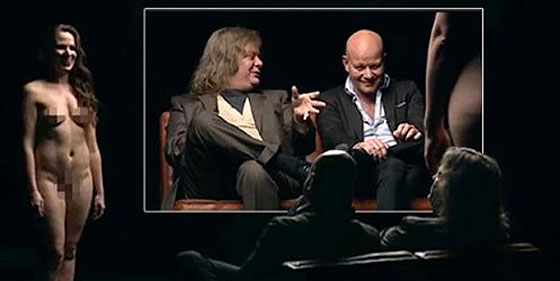
Esta semana el blog lo dedicamos a la impresión que nos ha causado un programa de la televisión pública danesa DR llamado “Blachman”, que consiste en lo siguiente: una mujer entra a un cuarto a media luz y se quita la ropa al tiempo que dos hombres sentados en un sofá enfrente de ella comentan y juzgan en voz alta cada detalle de su cuerpo desnudo. Se han podido escuchar frases como: "¿qué tal funciona tu vagina?", "¡qué pezones tan contentos!" o “siempre me han gustado los culos, ¿te puedes dar la vuelta?”
Mientras tanto, ella tiene que estar en silencio, no puede decir nada. 


               El programa ha levantado todo tipo de comentarios y críticas, de las cuales el presentador dice no comprender la causa pues se considera a sí mismo un revolucionario y “un genio”:
 “El cuerpo femenino ansía que hablen de él. Que los hombres hablen de él"
 Nos impresionan aún más los comentarios de la editora de la cadena televisiva, Sofía Fromberg que, aún siendo mujer, asegura que el show Blachman es un tributo a la belleza femenina y a la mujer en general y lo defiende con afirmaciones tales como:
“Para buscar a las participantes se publicó un anuncio en un periódico y se eligió a una variedad de mujeres: modelos, amas de casa, actrices, maestras de colegio, con cuerpos de todos los tamaños y formas distintas. Una con una cicatriz por una cesárea, otra era una mujer de 85 años, otra tenia un cuerpo voluptuoso con mucha celulitis en el trasero…”.
"Es un programa que revela lo que los hombres piensan sobre el cuerpo de una mujer, y honestamente. ¿Qué hay de malo en ello?”
Y añade:
“En la sociedad tenemos en un extremo a la pornografía y en el otro extremo a los puritanos. Pero no hay nadie en medio hablando abiertamente y de forma decente sobre el cuerpo desnudo de una mujer"
“Las participantes sólo recibieron una suma de dinero simbólica, para pagar los gastos de su participación”.
Este programa empezó el 2 de abril y acaba de culminar su ultima entrega. Como se puede comprobar, los comentarios soeces y grotescos sobre el cuerpo femenino no tienen un fundamento cultural suficiente como para mantener un programa vivo durante una larga temporada. Ahora se están replanteando hacer una nueva serie, para lo cual necesitan levantar más la polémica, que es de lo único que se puede alimentar este show.
Nos ha generado una sensación de rechazo, desde el sonido, la iluminación y el lenguaje corporal de los que actúan como jueces. Un rechazo instintivo.
Pasado ese primer shock y analizando un poco más la situación, nos llamaba la atención que esto se produzca en un país nórdico. Sin duda allí, las mujeres tienen menor pudor hacia su desnudez que en otras latitudes, pero por otra parte la humillación que supone este programa nos cuesta entenderla en un entorno cultural en el que se considera que la mujer está más liberada. Sin embargo, parece que allí el machismo también es evidente, hasta el punto de que se convierte en divertimento televisivo.
Este programa nos hace reflexionar sobre cómo a las mujeres nos sigue importando mucho la opinión que los hombres tienen sobre nuestro cuerpo, aunque sea mala. ¡Ni si quiera sobre nosotras!, sino sobre nuestro cuerpo. En un concurso de misses las mujeres van a que las aplaudan, aquí van a que las insulten y las juzguen. ¿Hasta que punto este programa nos pone en evidencia el deterioro que vive la especie, y ese tinte sadomasoquista que se produce en la relación entre el hombre y la mujer?
Y si ya nos referimos a ellos, no podemos por menos que preguntarnos ¿es eso realmente lo que piensan “honestamente” los hombres cuando ven a una mujer desnuda? Al menos eso es lo que nos argumentan y fundamentan para realizar ese programa. Si esto es cierto, verdaderamente el hombre ha perdido mucho su perspectiva, porque cuando observan a una mujer se quedan sólo en la parte material, en lo que se ve, olvidándose de todo lo que supone una fémina. Si lo comparamos con el Universo, el hombre estaría fijándose en la materia sólida que conocemos, olvidándose de que la materia oscura, la que no se ve, corresponde a más del 90% del mismo.
El universo femenino tiene aún la mayor parte de su ser en la oscuridad, descubrirlo  y comentarlo supone verdaderamente un reto para todos: hombres y mujeres. ¿Quién se atreve a hacer un programa sobre eso?
El desnudo puede ser liberador o esclavizador, según se plantee. El desnudo como tal es un acto liberador cuando ayuda a desatar los nudos de los prejuicios, pero puede llegar a ser tremendamente alienante cuando supone la humillación de quedar anclado a los juicios de un varón.
“Desnudo: quítate los nudos que te atan al prejuicio” J.L.P.

Link artículo en español:
Link artículo en inglés:

NAKED FOR A MASCULINE JUDGEMENT


This week’s blog is dedicated to the impression that caused to us a TV program in the Danish public television DR called “Blachman”, and it is about: a woman that enters a room with dim lights, takes her clothes off and at the same time, two men seated in front of her on a sofa, comment and criticize out loud each detail of her naked body. We can hear phrases like: “How does you vagina work?”, “You have such happy nipples!”, or “I’ve always liked asses, could you turn around?”
Meanwhile, she has to remain silent, she cannot say a word. 

This program has triggered all sorts of comments and criticisms. The host of the show says that he doesn’t understand why, because he considers himself a revolutionary and “a genius”.
“The feminine body longs to be talked about. That men talk about it.”
The TV editor, Sofia Fromberg’s comments impress us even more, even though she is a woman she assures that the Blachman show is a tribute to feminine beauty and to women in general; she defends it with affirmations like:
To search for the participants an ad in the newspaper was published and a variety of women were chosen: models, housewives, actresses, schoolteachers, with bodies of different sizes and forms. One had a C-section scar, another one was a woman 85 years old, another one had a voluptuous body with a lot of cellulite in her bottom…”.
“It is a program that reveals what men think of a woman’s body, and honestly, what is wrong about that?”
She adds:
“In this society we have on one extreme pornography and on the other the puritans. But there is no one in the middle speaking decently and openly about the naked body of a woman”.
“Participants only received a symbolic amount of money, to pay for the expenses of their participation”.
This program started on April 2nd and has just finished airing. As we can see, rude and grotesque comments about the feminine body don’t have enough cultural grounds to keep a show alive for a long time. They are now thinking of making a new show to which they need to create even more polemic; this is the only way this show can grow.
This show has generated us a feeling of reject, from the sound, the illumination, to the body language of the judges. An instinctive reject.
Past this first shock and analyzing a little bit more the situation, it called our attention that this happens in a Nordic country. Without doubt women there have less shyness towards their naked body, less than in countries of other latitudes; but on the other hand, the humiliation that this program supposes makes it difficult to understand how it can take place in a cultural environment where women are considered liberated. Though, it seems that machismo there is also evident, to the point that it becomes a television entertainment.
This program makes us reflect about how much women still care about the opinion men have about our bodies, even though it is a bad one. Not even about us!, but of our bodies. In a beauty pageant misses go to be applauded, in this show they go to get insulted and to be judged.  Does this show reveal to us the deterioration our species is living, and the trace of sadomasochism in the relations between men and women?
And now that we are talking about men, we cannot stop asking ourselves, is that what they really think “honestly” when they see a naked woman? Because that is what they say to defend this program. If this is true, then men have truly lost their perspective, because when they see a woman they stay only with the material part, on what they see, forgetting everything of what the feminine supposes. If we compare it with the universe, men are only watching the solid material we know, forgetting of the dark matter, what we cannot see, that is more than the 90% of it.
The feminine universe still has the biggest part of her being in the dark, to discover it and comment about it supposes a true challenge for us all: men and women. Who dares to make a program about this?
Nudity can be liberating or enslaving, depending on how it is focused. Nudity can be liberating when it helps untie the knots of prejudice, but it can be extremely alienating when it supposes the humiliation of getting stuck in the judgment of a man.
“Naked: take off the knots that tie you to prejudice” J.L.P.

domingo, 5 de mayo de 2013

LA GUERRA DE LOS SEXOS


Como bien sabemos, la guerra es una estrategia que el hombre se inventó para ganar. Ganar tierras, ganar reinos, ganar mujeres, ganar…
La guerra nunca había sido el lenguaje de las mujeres, hasta que quisimos ganar.
Estamos en un tiempo en el que la mujer quiere hacer cambios. El mundo como ha sido hasta ahora, ya no nos sirve. No nos sirve porque nos hemos dado cuenta de que en ese mundo somos seres inferiores y esclavas. Hemos despertado a la consciencia de liberarnos de las domesticaciones a las que estábamos atadas.
Este cambio de lo femenino, necesita también de un cambio en lo masculino, pero al hombre le cuesta. Apostamos a que no es por maldad, sino que más bien pensamos que su visión del mundo es distinto al nuestro, porque es una visión desde una posición de hegemonía. El cambio que debería hacer le asusta, quizás por la posibilidad de perder esta  hegemonía. En cierto modo, es cierto, porque en el cambio que proponemos las mujeres, no existen “hegemonías” por parte de nadie.
En esta tesitura, es fácil que se produzcan los enfrentamientos entre varones (que prefieren no cambiar) y mujeres (que apuestan por el cambio).
La mujer en su casa, en su trabajo o lugar de convivencia ve que el hombre –generalmente- no colabora, y que tiene aun ideas anticuadas con respecto a la mujer; incluso, en algunas ocasiones, busca el momento de recordarle o hacerle ver que él es el hombre, o sea, el que manda.  Es normal que montemos en cólera, peleemos una y otra vez pidiendo respeto, pero casi nunca llegaremos a ningún sitio.
La guerra no es nuestro camino, no es nuestro lenguaje. Si optamos por esta vía saldremos perdiendo siempre. ¡Siempre! No podemos seguir insistiendo en la guerra porque nos estamos agotando, nos estamos amargando, nos estamos enfermando. Y además, ellos, los hombres, ante el ataque, se ponen a la defensiva y ya no quieren escucharnos; piensan que todo lo que decimos o hacemos es una estrategia más para seguir con esa guerra.
Y no estamos diciendo que, por mantener la fiesta en paz, dejemos de hacer o decir las cosas que nos incomodan o molestan, ¡no! Pero pelear no es la solución.
Nuestra actitud debe cambiar. No podemos “ganarnos” el respeto por la fuerza. El respeto no se gana, si nos respetamos a nosotras mismas, nuestro entorno nos respetará. La dignidad tampoco se gana. Si nos consideramos dignas, de forma natural no participaremos en actos que consideremos indignos. La lucha por el respeto y la dignidad, es en vano.
Cuando estamos en guerra, gastamos una cantidad enorme de recursos para seguir sobreviviendo, y no tenemos el sosiego de ánimo ni la claridad mental para pensar, hacer, proyectar, programar, pautas diferentes. Nuevas estrategias no guerreras que nos permitan seguir nuestro camino de identificación.
En esta actitud, quizás una clave puede ser no tratar de cambiar al hombre. Si de todos modos no lo vamos a conseguir… El cambio en el varón se va a producir –si es que se produce- sucederán cuando el varón vea que no tiene un rival en la mujer. Y esto llevará mucho tiempo, porque ya sabemos que cuando las personas han vivido mucho tiempo en guerra, luego les resulta muy difícil adaptarse a la vida en paz.
Otra estrategia –que no acto de cobardía-, es ¡huir! Cuando la convivencia no es posible sin lucha, la estrategia más inteligente es la huida.
Debemos ser inteligentes, por nuestro propio bien, y pensar que nuestra prioridad es  encontrar nuestro propio camino y nuestra evolución. Pero si seguimos estancadas en un nivel bajo de lucha constante por nuestros derechos, nos estamos desviando de nuestro verdadero cometido.
Estas luchas nos retrasan, no nos permiten ver hacia donde queremos ir, y ahora mismo, lo más importante es alcanzar otro nivel de consciencia como mujeres. Y esta nueva consciencia nos permitirá establecer una convivencia ideal con el sexo masculino, porque al fin y al cabo, somos opuestos y complementarios, diseñados para llevarnos bien.

THE WAR OF THE SEXS


As we well know, a war is a strategy men invented to win. Win lands, win kingdoms, win women, win…
War has never been a part of a women’s language, until we wanted to win.
We are in a time when women want to make changes. The world as it has been until now, is no longer of any use to us. It isn’t of any use because we have realized that in this world we are inferior beings and slaves. We have awakened to a new liberating consciousness of freeing ourselves of the domestications we are tied to.
This feminine change needs of a masculine change as well, but it is hard for men. We bet that this isn’t because he is evil; we rather think that his views of the world are different from ours, because he has the view from the hegemony position. The change he should make scares him, maybe because he thinks he will loose this hegemony. And in some way it is true, because in the change women suggest hegemonies do not exist, from either side.
In these circumstances it is easy that confrontations arise between men (that will rather not change) and women (that bet for a change).
Women in their houses, in their jobs, or in the places where they interact with men, see that they –generally- don’t collaborate, and that these men still have obsolete ideas about women; they even sometimes look for the moment to remind women that HE is the man, that is, the one who gives the orders. It is only natural that we get angry, fight once and again asking for respect, but we will almost never get anywhere.
War isn’t our path; it isn’t our language. If we choose this way we will always loose. Always! We cannot keep insisting on wars because we are getting exhausted; we are becoming bitter; we are getting sick. Besides, men, when attacked, they get defensive and stop listening to us; they think that everything we say or do is a strategy to continue with this war.
We are not saying that to have peace we should stop saying what bothers us or makes us uncomfortable, no! But fighting is not the answer.
Our attitude should change. We cannot “win” respect forcibly. Respect isn’t won, if we respect ourselves, people around us will respect us. Dignity isn’t won either. If we consider we have dignity, we will not participate in actions we consider unworthy of us. The fight for dignity and respect is in vain.
When we are in war, we waste an enormous amount of resources in order to keep surviving, our mood is restless and we don’t have clarity of mind to think, do, project, program, different guidelines; new non-warrior strategies that will allow us to continue our path towards our identity.
In this attitude, a key might be to try not to change men; we will not be able to change them anyway…  Changes in men will happen-if they happen- when they see that women are not their rivals. This will take a lot of time, because we know that when people have lived in a war for a long time, it is very difficult for them to adapt to a peaceful living.
Another strategy –and it is not a cowardice act – is to run away! When collaboration without fights is not possible, the most intelligent strategy is to escape.
We have to be intelligent, for our own good, and think that our priority is to find our own path and our own evolution. But if we maintain ourselves in a low level of constant fighting for our rights, we are diverting from our true mission.
These fights delay us; they don’t let us see where we want to go, and right now, the most important thing is to reach another level of consciousness as women.  And this new consciousness will allow us to establish an ideal collaboration with the masculine sex, because we are opposites but complement each other; we are designed to get along.

martes, 30 de abril de 2013

JULIA PIERSON


http://internacional.elpais.com/internacional/2013/04/07/actualidad/1365296141_806641.html


¡Qué curioso que el presidente –a la vista del escándalo de Cartagena de Indias- quiera “lavar” la imagen de sus guardianes con un rostro de mujer!: La señora Julia Pierson.

¿Pensará el Señor Obama que una mujer no se “va a ir de chicos”? ¿Pensará el Señor Obama que una mujer es más fiel a su cometido y más honesta en sus acciones? ¿Habrá pensado que los chicos “no son de fiar”?

Dado que todo ello ha estado unido a una “affaire sexual”, no nos queda más remedio que sacar conclusiones sexuales al respecto. Tal vez todo sea una cuestión de “celo”. Los machos de todas las especies cuando “huelen” una hembra parece que se saltan todas las barreras.

El Diccionario de la Real Academia de la Lengua Española nos dice que la palabra proviene del latín “zēlus”, ardor, celo, y este del griego ζῆλος, derivado de ζεῖν, hervir). Y nos da las siguientes acepciones:

1. Cuidado, diligencia, esmero que alguien pone al hacer algo.

2. Interés extremado y activo que alguien siente por una causa o por una persona.

3. Recelo que alguien siente de que cualquier afecto o bien que disfrute o pretenda llegue a ser alcanzado por otro.

4. En los irracionales, apetito de la generación.

5. Época en que los animales sienten este apetito.

6. Período del ciclo menstrual de la mujer en que se produce la ovulación.

7. Sospecha, inquietud y recelo de que la persona amada haya mudado o mude su cariño, poniéndolo en otra.

Qué duda cabe que el “celo” de una mujer tiene mucho que ver con las dos primeras acepciones. Una de las cualidades de la mujer es su capacidad de “cuidar”, ya sean personas, ya sean bienes materiales. Cuido que comienza por el alimento; tal vez sea una bonita casualidad que la palabra derive del verbo griego que significa “hervir”.

Quizás este don es fruto de su sentido maternal, que se hace extensivo a su entorno. De alguna manera, hoy en día, se tiene la certeza de que las mujeres en general- cuidan. Y así, cuando han ocurrido catástrofes naturales, o guerras, las ayudas que se han ofrecido a las áreas en conflicto se ha preferido que fueran a parar a manos de las mujeres para su distribución, en la certeza de que ellas las hacen llegar a su destino y no especulan con la mercancía en los mercados negros, como desgraciadamente ocurre.

La extensión de este sentido maternal que lleva a cuidar todo y a todos, sin duda es una de las claves para un cambio social real. No son cambios a gran escala, pero son cambios, en la localidad, en la comunidad, en el trabajo, en la cooperativa; y estos pequeños focos pueden ser referencias para otros. Ya nos lo dicen los físicos cuánticos: Un pequeño cambio puede provocar un gran cambio dentro de un sistema.

Esta noticia nos ha llevado a la siguiente reflexión : si se ha encargado –desde estamentos masculinos- a una mujer el cuidado del hombre “más importante del planeta”, desde el pensamiento “femenino” ¿qué es lo más importante que debemos cuidar?

Pensamos que la educación de las hijas y de los hijos en el sentido del cuidado. Referente a las primeras dotándolas de una cultura, que hasta hace bien poco les ha sido negada -y aún continúa esta negación en muchos países-, para que desde ella aprendan que una mujer no necesita del varón para sentirse protegida y cuidada, y sepan “cuidarse” a ellas mismas. Así no surgirá en sus vidas el atavismo del “príncipe salvador”. Y a los niños inculcarles el cuidado de las cosas en general, para que pierdan la bula social que otorga a un hombre el derecho de “llevarse todo por delante”, porque para algo es el “dueño y señor”. Por esa falta de cuido del entorno de la que adolecido el hombre, es que hemos llegado a un planeta “saqueado” y a un lenguaje de extrema violencia.

Si de paso aprenden que cuidarse unos a otros es tarea de especie, estaremos en vías de la supervivencia y de evolución.

No sabemos las motivaciones que haya tenido el Sr. Obama para poner su seguridad personal en manos de la señora Julia Pierson. A lo mejor le ha venido a la memoria su ancestral Africa, continente en el que sus mujeres han sabido gestionar el cuidado de sus aldeas y de sus gentes. Sin duda habrá “razones de estado” y el curiculum de la señora Pierson habrá sido también un motivo de peso. Le deseamos –al decir del pueblo chino- ¡larga vida!

Particularmente nos alertamos al ver que cualidades intrínsecas de lo femenino se pongan hoy en día al servicio de una organización social masculina en muy diferentes áreas y se aprovechen para llenar los espacios que la incompetencia de un sistema va dejando huecos. ¡Cuidado! ¡No seamos agua que se extraiga para saciar la sed de las incompetencias y sequen nuestros pozos.

¡Cuidémonos las mujeres unas a otras!


JULIA PIERSON

It is funny that President Obama –after the scandal in Cartagena, Colombia- wants to clean his guardian’s image with a woman’s face: Mrs. Julia Pierson.
Does Mr. Obama think that a woman will not go after “young men”? Does he think that a woman is more faithful to her duty and more honest in her actions? Does he think that men are not to be trusted?
We have to make sexual conclusions about this, because all this is linked to a “sexual affair”. In Spanish, there is a word that represents that act that a male of any species has when he goes after the female of his same specie: to be in heat, in Spanish is “celo”. The funny thing about this word is that it also means “zeal”, that is, to take care of something.
In this Spanish word “celo” we want to focus, because it describes perfectly well what has happened in this story. The sex scandal of Cartagena, Colombia, where men go after females, and Mr. Obama choosing a woman for this job.
This zeal (Celo) or care that someone has when something is done has a lot to do with women. One of the qualities a woman has is her ability to “take care” of people, of material things, etc.
Maybe this gift comes from her maternal instinct, which branches to all of her environment. Somehow, there is the notion that –in general- women “take care of”. In this way, when natural disasters or wars have happened, they have chosen women to take charge of the distribution of international aids, because they were certain that they would take care of delivering them to the proper hands and that they wouldn’t go to sell the goods to black markets, as it usually happens.
The extension of this maternal sense, which leads her to take care of everyone and everything, is one of the keys for a real social change. It isn’t a big change, but it is a change in your neighborhood, community, in your job; and these small places could become a reference to others. As quantum physicists say: A small change can trigger a big change inside a system.
This news has made us reflect about this: If a women has been put in charge of taking care of “the most important man in the world”, from a “feminine” way of thinking, what is the most important thing we have to take care of?
We believe it is the education of our children in the sense of the care. With respect to female children, giving them the culture, that until a few years ago it was denied to us –and this still happens in a lot of places- so that they learn that a woman does not need a man to feel protected and secure, and they learn to take care of themselves. This way, they will not create the myth of the “savior prince”. To our male children we can teach to take care of things in general, so they might loose the social pardon given to men of being allowed to “rampage” because he is the “lord and owner”. Because of this lack of care of men in the environment, we have a sacked planet and we have an extremely violent language.
If they can learn that taking care of others is a matter of all human species, we will be walking towards evolution and survival.
We don’t know what were Mr. Obama’s motives to put his personal security in hands of Mrs. Julia Pierson. Maybe his ancestral Africa came to his mind; Africa is a continent where women have had the ability of taking care of their villages and people. There is no doubt there are “state reasons” for his choice, and Mrs. Pierson’s résumé is a very heavy one. We wish her –as is said in China- a very long life!
We are particularly alert in seeing that intrinsic feminine qualities are now at service of a masculine social organization in very different areas, and they are used to fill the incompetence gaps of our system. Be careful! Let us not become the water used to quench the thirst of incompetence, until our well is dried up.
Women should take care of one another!

lunes, 22 de abril de 2013

EL CROMOSOMA “Y” SE EXTINGUE, ¿LOS HOMBRES TAMBIÉN?


El título de la noticia aparecida en prensa no puede pasar desapercibido: “El sexo masculino está abocado a la extinción, según una reputada científica”.

Para hacer más contundente esta afirmación, la doctora Graves empezó en su exposición ante la Academia de Ciencias de Australia diciendo: “Lo que voy a decir es una muy mala noticia para los hombres...”
La situación actual que nos cuentan los científicos es que el cromosoma Y, y por ende la especie varón, evoluciona hacia su desaparición.
En Internet se pueden encontrar cientos de entradas con comentarios sobre el tema: con o sin fundamento científico, a favor o en contra del hecho de esa idea de desaparición, con fantasías sobre un mundo sin hombres… Se pueden escuchar muchas voces que se alzan comentando cosas como “Por eso los hombres son cada vez menos fértiles”, “Por eso han aumentado los homosexuales”, “¿Para qué necesitamos a los hombres? Nos reproduciremos con los bancos de semen”, “Un mundo sin hombres será mejor porque ya no seremos sus esclavas”… También las hay en el otro sentido “¿qué haremos sin hombres?, ¿cómo nos reproduciremos?”, “¡Sólo podremos tener sexo con otras mujeres!”, “¡La especie humana se terminará cuando se acaben las existencias de los bancos de semen!”… Y un larguísimo etcétera.
En este artículo no queremos entrar en la discusión de los pros y los contras –lo dejamos para los posibles comentarios de nuestros lectores-, pero sí queremos llamar la atención de una cosa: a lo largo de la historia de lo que conocemos como VIDA (que todavía no nos ponemos de acuerdo en definir qué es, por cierto), en este nivel y en este planeta llegó un momento que ésta optó por la reproducción sexual (aparecieron las hembras y los machos) y continuó a través de la evolución de las especies. Lo que sí se ha observado es que ha habido especies que han aparecido y, llegado un momento, cumplida su función, han desaparecido y han dado lugar a otras. Esto ha sido así desde siempre. La VIDA tiene recursos para su perpetuación: se adapta, y evoluciona, y permanece.
Entonces, con respecto a la evolución de la humanidad y de las dos especies: mujer y varón, nos podríamos preguntar: si es cierto que como especie va a desaparecer por la evolución que lleva la VIDA, ¿se podría decir que el ser humano como varón ha cumplido su función?
Ni como varón ni como mujer el ser humano ha cumplido su función. La VIDA nos ofrece la posibilidad de evolucionar, de desarrollarnos a todos los niveles, y hemos elegido una vía muy limitada, la vida de lo material y lo tecnológico. Pensamos que tenemos que amplificar nuestra aspiración para desarrollarnos íntegramente y llegar a ser testimonio del proyecto inicial que sobre nosotros hubo. Desde el momento en que se optó por el dominio y esclavitud de una especie sobre la otra, la evolución no parece que haya ido en el sentido deseable. Por lo tanto, desde nuestro punto de vista, el varón todavía no debe desaparecer. Tenemos todavía una gran tarea pendiente.
Cuando se identifique el “femenino de humanidad” (que incluye a ambos, hombre y mujer, porque ambos tenemos el cromosoma X) y comencemos a interactuar con las cualidades que le son propias a esa X o femenino, estaremos realizando verdaderamente nuestra función para la VIDA y eso nos llevará a situaciones por ahora insospechadas.
Queda mucho por hacer. Los científicos nos dicen que la especie varón desaparecerá en unos 5 millones de años… ¡Esperemos que no tengamos que esperar tanto para cumplir la tarea encomendada!

CHROMOSOME "Y" IS BECOMING EXTINCT, SO DO MEN?


The headline of this news could not pass by unnoticed: “Men are headed towards extinction, according to a renowned scientist”.


To make this affirmation more convincing, Dr. Graves started her lecture in the Australian Academy of Science saying: “What I am about to say is very bad news for men…”
Scientists tell us that the actual situation of the chromosome Y, and the male species, is that they are evolving towards disappearance.
We can find in the Internet hundreds of entries with comments about this: with or without scientific basis, in favor or against the idea of the disappearance, with fantasies about a world without men… Voices can be heard saying things like “men are less fertile”, “This is the reason why there are so many homosexuals”, “What do we need men for? We will reproduce with the help of the sperm banks”, “A world without men will be better because we will no longer be their slaves”… There are also comments on the other side: “What will we do without men? How will we reproduce?”, “We will have sex only with women!”, The human species will end when the sperm banks end their stock!”… etc.
We do not want to enter in the discussion about pros and cons –we will leave these for you to comment- but we do want to call attention on one thing: throughout the history of what we call LIFE, in this level and on this planet, sexual reproduction became the option (and male and female appeared) for the evolution of the species. It has been observed that species, when they have completed their role, they have disappeared and others have appeared. It has been like this forever. Life has resources for its perpetuation: it adapts, it evolves and remains.
So, with respect to human evolution and both species: men and women, we could ask: if it is true that, as a species, it will disappear because of the evolution of LIFE, can we say that that the male human being has already completed their role or task?
Not male or female, as human beings have completed their role. LIFE offers us the possibility to evolve, to develop in every level, and we have chosen a very limited path, the material and technological way of life. We believe that we have to amplify our aspirations to develop completely and to become proof of the project that was given to us. From the moment that slavery and domination of one species over the other was an option, evolution hasn’t gone on a desirable way. Therefore, from our point of view, men should not yet disappear. We still have important things to do.
When the “Human Femininity” is identified (it includes both men and women, because they both have the X chromosome) and we start to interact with the qualities that belong to that X or feminine, we will be truly doing our task in life, and this will take us to unexpected situations.
There is still a lot to do. Scientists tell us that the male species will disappear in 5 million years… We hope we will not wait that long to complete our task!